
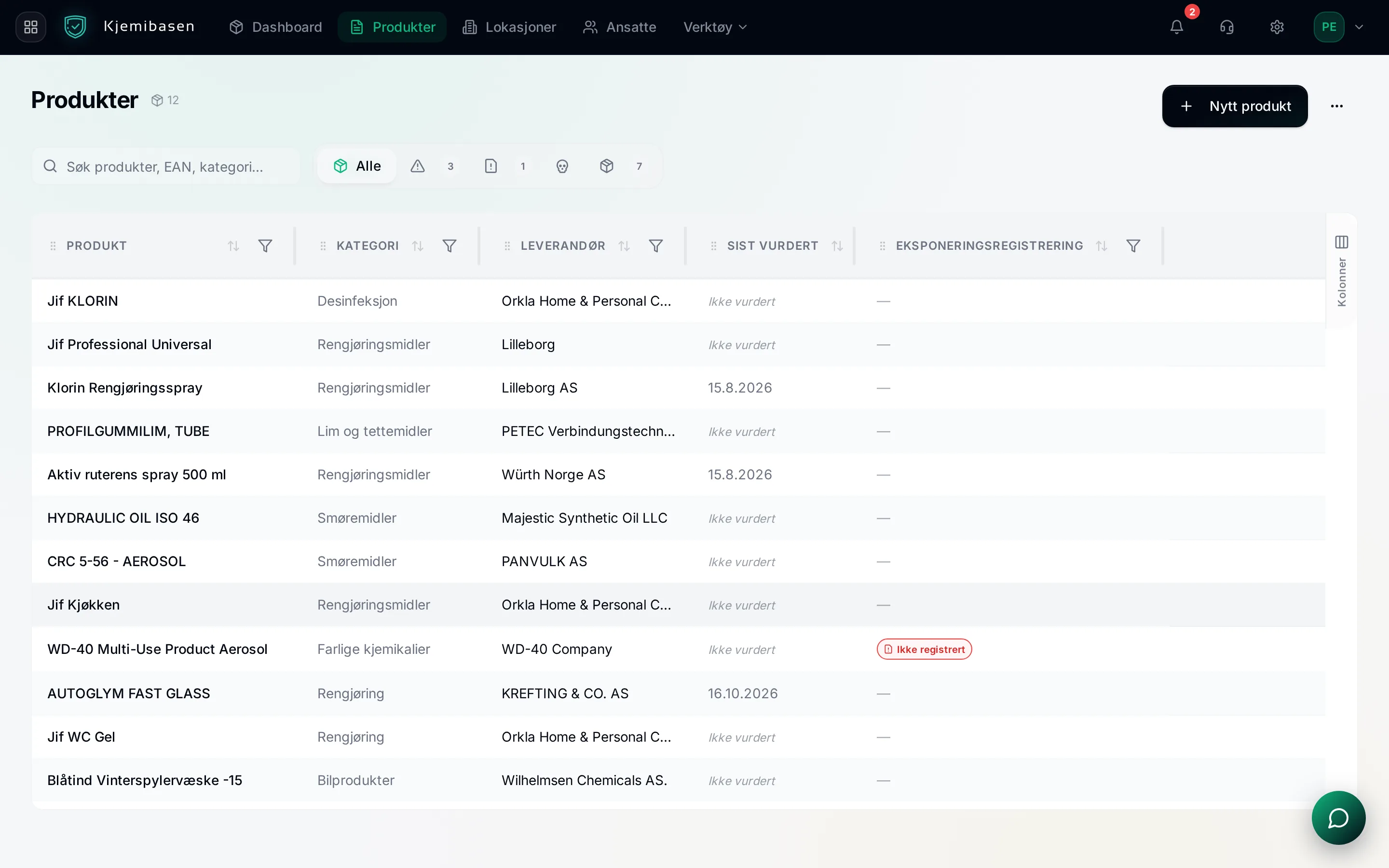
Chemical registers for painting and coating professionals
Commercial painters handle classified chemicals daily and require straightforward safety documentation on every job.
Typical coatings products
- Solvent-borne and water-borne paints
- Polyurethane and epoxy varnishes
- Brush cleaners and paint strippers
- Primers and rust-inhibiting sealers
- Plaster fillers and joint compounds
Primary health concerns
Solvent vapour exposure
Inhalation of volatile solvents can affect the central nervous system and cause respiratory irritation.
Skin sensitisation
Direct contact with epoxy hardeners and acrylic resins can trigger lifelong occupational allergies.
Isocyanate hazards
Two-component polyurethane coatings contain isocyanates, a primary cause of occupational asthma.
Operational safety controls
Adequate airflow
Prioritise mechanical extraction or cross-ventilation in interior spaces.
Respiratory gear
Use half-mask respirators with appropriate organic vapour filters during spray application.
Protective gloves
Wear chemical-resistant nitrile gloves when mixing, pouring, and cleaning tools.
Managing mobile painters' records
- Ensure all paints and thinners are cataloged in your digital register
- Provide mobile access for painters working at different client sites
- Mount QR code cards inside mobile work vans for quick roadside reference
Summary
Reliable chemical safety management ensures painting teams operate safely and comply with occupational health regulations.